
- Nylon thermal fuse: To determine the quality of the bonding effect, the first thing to check is whether the melting point is compatible.
- The government-business symposium on the textile and garment industry chain in Heze City was successfully held.
- The 2026 Advanced Fibre Materials Innovation Conference was held in Shengze.
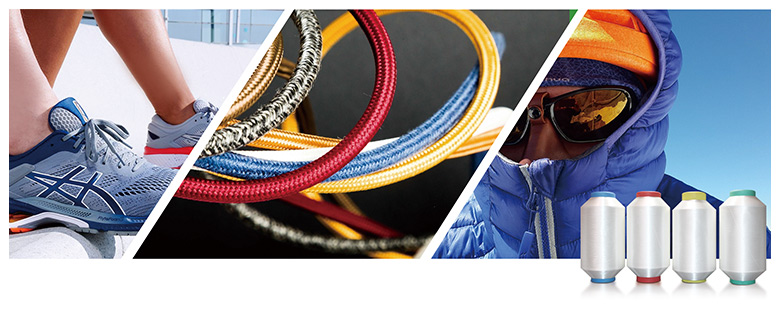
- Fujian Zhangping Xielong Group High-tech Chemical Fiber Company Co., Ltd. will guide you to discover: The ingenious uses of nylon hot melt filament in daily life
- The 2026 Shanghai Autumn Yarn Expo, a yarn exhibition, concluded officially at the National Exhibition Center.
- Nylon thermal fuse ≠ ordinary thermal fuse

- Contact: Mr. Jin +86 15805011538
- Email: xmzx333@163.com
- Web: www.xlfiber.com
- Add: 85 Jinghua Avenue, Xiyuan Industrial Park, Zhangping City, Fujian
The role of nylon thermal fuse in the field of textile bonding lies between sewing thread and glue. It is an ordinary yarn at room temperature and can be woven normally; once the temperature reaches the set threshold, the fuse softens and melts, penetrating the gaps between the surrounding fibers, and after cooling, it locks the nodes. This mechanism sounds simple, but the quality of the bonding depends on several easily overlooked matching issues.
The bonding principle of nylon hot melt fuseis that when the fuse reaches the corresponding melting temperature, the surface softens and flows, moistening the surface of the substrate fibers, and when the temperature drops, the melted part re-solidifies and locks with the substrate fibers, forming a stable bonding node. Unlike ordinary adhesives, it belongs to physical melting bonding and is less likely to have the problems of adhesive layer peeling or excessive melt leakage contaminating the fabric.
The matching of melting point with the substrate is the starting point. The melting points of nylon hot melt fuses on the market are relatively wide, with common specifications roughly covering 85°C to above 140°C. The low-temperature type is suitable for clothing bonding and lace edge locking in scenarios that are afraid of heat deformation; the high-temperature type is used for automotive interiors, outdoor products, etc., which need to withstand subsequent processing or use environmental temperatures. If the melting point is lower than the subsequent processing or use temperature, the bonding layer may re-soften and fail; if the melting point is too high, the substrate may be damaged before the hot thermal fuse. Laboratory research reports that by modifying polyetheramine, the melting point of copolyamide resin can be reduced from about 120°C to around 82°C, and it can maintain a bonding strength of 12 MPa under specific test conditions (specific values vary with the formula and test method), indicating that there is no inevitable contradiction between low melting point and bonding strength; the common low-melting-point specifications on the market are mostly above 85°C.
In actual production, the advantages of nylon thermal fuse in bonding are reflected in multiple aspects. The bonded products maintain a soft hand feel and do not form obvious hard glue blocks, which is suitable for products with requirements for touch sensation such as clothing accessories, automotive interiors, and non-woven fabric composites. The bonding points have good water-wash resistance and can maintain a certain bonding strength after several washes under normal water washing conditions (the specific number of washes and strength retention rate vary with the specification and substrate); it can meet the washing requirements of most conventional textiles. At the same time, the processing operation is convenient, and it is compatible with various thermal processing equipment such as hot pressing and ultrasonic waves, making it easy for enterprises to adjust production processes.
When selecting and using, different melting point specifications of nylon hot melt fuses can be chosen according to product needs. The low-melting-point type is suitable for substrates that are not resistant to high temperatures, reducing damage to the substrate during high-temperature processing; the high-melting-point product has better heat stability of the finished product and is suitable for processing environments or use temperatures that are higher than the subsequent processing temperature. Before production, it is recommended to conduct a small sample hot pressing test to confirm the temperature, pressure, time, and cooling setting parameters, verify the bonding strength, and pay attention to avoiding under-melting or over-melting to avoid quality fluctuations in batch production.
Overall, nylon hot melt fuse plays an important role in the solvent-free hot melt composite process due to its controllable bonding characteristics. By reasonably controlling process parameters and matching the corresponding substrates, its bonding advantages can be fully exerted, helping various fiber products achieve lightweight and simple composite processing.
Fujian Zhangping Xielong Group High-tech Chemical Fiber Company Co., Ltd. leading products of include:nylon thermal fuse, TPU special filament, polyester thermal fuse, TPU hot melt omentum, PA hot melt omentum,.The company has always adhered to the 3s core service tenet: "saving time, cost savings, saving losses", advocates a total of industrial value, and is committed to providing a better solution for the overall industrial chain. Plan, welcome to buy the nylon thermal fuse,polyester thermal fuse!
- The government-business symposium on the textile and garment industry chain in Heze City w
- Nylon thermal fuse: To determine the quality of the bonding effect, the first thing to che
- The 2026 Advanced Fibre Materials Innovation Conference was held in Shengze.
- Fujian Zhangping Xielong Group High-tech Chemical Fiber Company Co., Ltd. will guide you
- The 2026 Shanghai Autumn Yarn Expo, a yarn exhibition, concluded officially at the Nationa
- Nylon thermal fuse ≠ ordinary thermal fuse
- The promotion meeting for the development of the high-end textile and clothing industry cl
- Textile bonding, why are more and more people using nylon thermal fuse adhesive?
- Select the polyester hot melt filament and improve the production yield of the composite p
- Select the polyester thermal fuse and improve the production yield of the composite produc