
- Nylon thermal fuse: To determine the quality of the bonding effect, the first thing to check is whether the melting point is compatible.
- The government-business symposium on the textile and garment industry chain in Heze City was successfully held.
- The 2026 Advanced Fibre Materials Innovation Conference was held in Shengze.
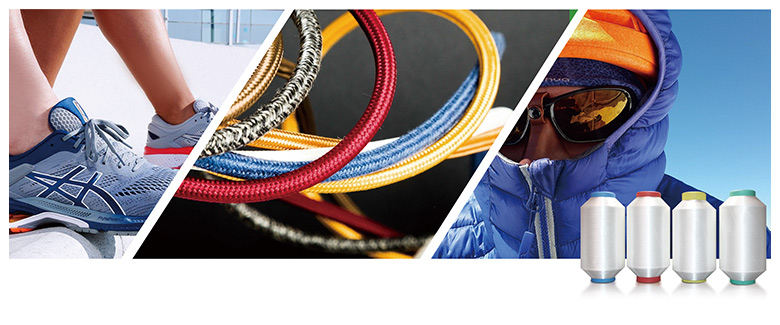
- Fujian Zhangping Xielong Group High-tech Chemical Fiber Company Co., Ltd. will guide you to discover: The ingenious uses of nylon hot melt filament in daily life
- The 2026 Shanghai Autumn Yarn Expo, a yarn exhibition, concluded officially at the National Exhibition Center.
- Nylon thermal fuse ≠ ordinary thermal fuse

- Contact: Mr. Jin +86 15805011538
- Email: xmzx333@163.com
- Web: www.xlfiber.com
- Add: 85 Jinghua Avenue, Xiyuan Industrial Park, Zhangping City, Fujian
The market for chemical fiber hot melt bonding materials is constantly evolving. Downstream industries such as footwear and apparel, home textiles, and industrial textiles have continuously raised their requirements for the stability and compatibility of hot melt raw materials. polyester thermal fuses, as the mainstream bonding raw materials, have different batch qualities, which directly affect the bonding effect of the finished products and the production yield. Coiling Group's high-tech chemical fibers focus on nylon hot melt filaments, polyester thermal fuses, TPU special fibers, and various hot melt net membranes. Based on industry practice, let's discuss the core points of polyester hot melt filament procurement.
When purchasing polyester hot melt filaments, prioritize selecting specifications based on your own process and end product positioning. Different melting points and fineness of polyester hot melt filaments have significantly different applicable scenarios. Key indicators such as melting point range, fineness, and oil content need to be paid attention to, matching the temperature of the hot press equipment and processing techniques. For applications in shoe materials, home textiles composites, and reinforcement of industrial fabrics, the toughness of the filament and the bonding performance after hot melting are all different. Do not simply refer to common market specifications; instead, combine your own hot press process conditions for sample verification to avoid problems such as adhesion failure or fabric surface defects when running the machine.
1. First, focus on the process: The melting point range is more crucial than the melting point number.
Hot melt filaments are not necessarily better with a lower melting point. The key is whether it can fit into your existing production line. The setting temperature, pressing time, running speed, and synchronization with the main fiber's thermal shrinkage will all affect the final bonding effect. A lower melting point may cause post-processing dyeing and finishing to melt prematurely; a higher melting point may lead to poor adhesion. It is recommended to provide the process parameters to the supplier and conduct sample verification by running the machine to compare, rather than just selecting based on the parameter table.
2. Then, consider the batch size: Sample qualification does not mean batch stability.
What truly affects costs is often batch consistency. Pay close attention to fluctuations in fineness and strength, the dispersion of thermal shrinkage rate, as well as roll forming and breakage conditions. Run a small batch trial production before placing an order, produce continuously at normal speed, and then measure peel strength and water washing resistance. Compared to unit price, rework rate, downtime, and customer complaints are the more costly aspects.
Fujian Zhangping Xielong Group High-tech Chemical Fiber Company Co., Ltd. has been continuously focusing on the fields of hot melt filaments and hot melt film membranes. They have been working diligently to ensure the stability of their products and the accuracy of their cooperation.
Fujian Zhangping Xielong Group High-tech Chemical Fiber Company Co., Ltd. leading products of include:nylon thermal fuse, TPU special filament, polyester thermal fuse, TPU hot melt omentum, PA hot melt omentum,.The company has always adhered to the 3s core service tenet: "saving time, cost savings, saving losses", advocates a total of industrial value, and is committed to providing a better solution for the overall industrial chain. Plan, welcome to buy the nylon thermal fuse,polyester thermal fuse!
- The government-business symposium on the textile and garment industry chain in Heze City w
- Nylon thermal fuse: To determine the quality of the bonding effect, the first thing to che
- The 2026 Advanced Fibre Materials Innovation Conference was held in Shengze.
- Fujian Zhangping Xielong Group High-tech Chemical Fiber Company Co., Ltd. will guide you
- The 2026 Shanghai Autumn Yarn Expo, a yarn exhibition, concluded officially at the Nationa
- Nylon thermal fuse ≠ ordinary thermal fuse
- The promotion meeting for the development of the high-end textile and clothing industry cl
- Textile bonding, why are more and more people using nylon thermal fuse adhesive?
- Select the polyester hot melt filament and improve the production yield of the composite p
- Select the polyester thermal fuse and improve the production yield of the composite produc