
- Nylon thermal fuse ≠ ordinary thermal fuse
- The 2026 Shanghai Autumn Yarn Expo, a yarn exhibition, concluded officially at the National Exhibition Center.
- The promotion meeting for the development of the high-end textile and clothing industry cluster and the Textile and Clothing + AI roadshow were held in Jiangyin.
- Textile bonding, why are more and more people using nylon thermal fuse adhesive?
- Select the polyester hot melt filament and improve the production yield of the composite product.
- Select the polyester thermal fuse and improve the production yield of the composite product.

- Contact: Mr. Jin +86 15805011538
- Email: xmzx333@163.com
- Web: www.xlfiber.com
- Add: 85 Jinghua Avenue, Xiyuan Industrial Park, Zhangping City, Fujian
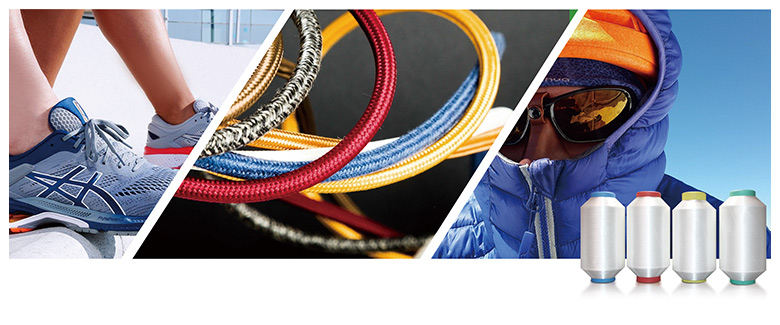
Nylon thermal fuse is a special nylon thermal fuse after the glue, the bonding effect, environmental protection, safety and no odor, is a rapidly developing high-tech products in the world. It is used for flying weaving uppers, socks and shoes, webbing, chenille, thread connecting thread, lace, Bundy thread weaving, webbing, wool carpet, padding, automobile lining and other industries.
Nylon thermal fuse has low melting point, thermoplasticity and self-viscosity. When heated to a certain temperature, it will soften and melt into a viscous fluid with certain fluidity, and then resolidify into a solid after cooling. Hot fuse and conventional polyester, nylon, wool or other fibers mixed to produce nonwovens or knitted or woven hot bonded fiber products features: soft feel, high strength, washable, crisp, easy to take care of, no environmental pollution, etc.
Nylon thermal fuse has the following properties:
1. Low melting point, nylon hot fuse melting point as low as 90C.
2. Good wear resistance. The wear resistance of polyamide fiber is the best among all textile fibers.
3, high breaking strength, the breaking strength of polyamide fiber fiber for textile use is 3.5-5.0g/d.
4, good dyeing, the dyeing of polyamide fiber is more difficult than natural fiber, but it is still easier to stain than other synthetic fibers, generally with acid dyes. It can replace polypropylene, polyamide hot melt adhesive in some fields, but also has its own unique application field.
The low melting point nylon thermal fuse produced by Xelong company is large-scale and serialized, with the production and sales volume of nearly 200T/ month. Both production and sales volume and specifications and varieties are leading the industry in China. Has passed the European Union (OEKO-TEX Standard 100) harmful substances detection, in the international and domestic brand products are widely used.
Fujian ZhangpingXielong Group High-tech Chemical Fiber Company Co., Ltd. leading products of include:nylon thermal fuse, TPU special filament, polyester thermal fuse, TPU hot melt omentum, PA hot melt omentum,.The company has always adhered to the 3s core service tenet: "saving time, cost savings, saving losses", advocates a total of industrial value, and is committed to providing a better solution for the overall industrial chain. Plan, welcome to buy the nylon thermal fuse,polyester thermal fuse!
- The 2026 Shanghai Autumn Yarn Expo, a yarn exhibition, concluded officially at the Nationa
- Nylon thermal fuse ≠ ordinary thermal fuse
- The promotion meeting for the development of the high-end textile and clothing industry cl
- Textile bonding, why are more and more people using nylon thermal fuse adhesive?
- Select the polyester hot melt filament and improve the production yield of the composite p
- Select the polyester thermal fuse and improve the production yield of the composite produc
- The training and promotion activity on intellectual property for the textile and footwear
- The invisible framework hidden in autumn clothes: What is nylon thermal fuse thread?
- Analyzing Industry Trends from the 2026 Global Home Textile Exhibition
- Say goodbye to pinholes and residues! Nylon thermal fuse enables integrated textile moldin