
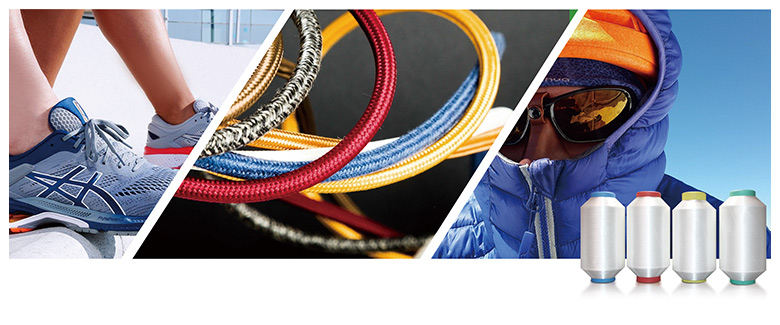
- Nylon thermal fuse ≠ ordinary thermal fuse
- The 2026 Shanghai Autumn Yarn Expo, a yarn exhibition, concluded officially at the National Exhibition Center.
- The promotion meeting for the development of the high-end textile and clothing industry cluster and the Textile and Clothing + AI roadshow were held in Jiangyin.
- Textile bonding, why are more and more people using nylon thermal fuse adhesive?
- Select the polyester hot melt filament and improve the production yield of the composite product.
- Select the polyester thermal fuse and improve the production yield of the composite product.

- Contact: Mr. Jin +86 15805011538
- Email: xmzx333@163.com
- Web: www.xlfiber.com
- Add: 85 Jinghua Avenue, Xiyuan Industrial Park, Zhangping City, Fujian
As the core showcase window of the domestic home textile industry, the 2026 (Autumn) Global Home Textile Eco-Fashion Exhibition and the 18th Shaoxing Qiaokou China Textile City Curtain and Textile Art Exhibition reflects the real development status and iterative trend of the 2026 home textile industry. With the gradual decline of the low-cost, extensive competition, the development pace of the home textile industry has steadily slowed down, and the industry has gradually shifted from scale expansion to quality improvement and stable iteration. The changes in market pattern, product research and development, and terminal operation have clear and definite trends, which are in line with the actual development trend of the current industry.
Functionality and texture go hand in hand. Products should meet the real needs of the market.
Nowadays, home textile products no longer merely pursue basic decorative effects. Functionality, practicality, and fabric texture that are suitable for daily use have become the core standards for new product development and market sales. They meet the real usage needs of end consumers.
Multifunctional practical fabrics have become the mainstream choice in the market. Fabrics such as curtains and bedding with antibacterial and dust-proof properties, easy cleaning and maintenance, high shading, wear resistance, and breathability have continuously improved their market adaptability and coverage. Natural texture fabrics such as cotton, linen, Tencel, and wool are increasingly widely used, and environmentally friendly, durable, and easy-to-care-for processes and fabrics are more favored by the market. Ordinary fabrics with low durability and single functions are gradually被淘汰 from the market.
Product aesthetics show a clear stratification trend. The mass market focuses on low-saturation color schemes, simple and versatile, and basic styles that are suitable for various home decoration styles, balancing cost performance and practicality; the mid-to-high-end market pays more attention to original patterns, unique textures, and fine craftsmanship, relying on differentiated design to avoid homogenization competition, becoming the core advantage of brand products.
Note: The content and template of this article are collected from the internet and are copyrighted by the original authors; please notify in time if there is any infringement and contact for deletion.
- The 2026 Shanghai Autumn Yarn Expo, a yarn exhibition, concluded officially at the Nationa
- Nylon thermal fuse ≠ ordinary thermal fuse
- The promotion meeting for the development of the high-end textile and clothing industry cl
- Textile bonding, why are more and more people using nylon thermal fuse adhesive?
- Select the polyester hot melt filament and improve the production yield of the composite p
- Select the polyester thermal fuse and improve the production yield of the composite produc
- The training and promotion activity on intellectual property for the textile and footwear
- The invisible framework hidden in autumn clothes: What is nylon thermal fuse thread?
- Analyzing Industry Trends from the 2026 Global Home Textile Exhibition
- Say goodbye to pinholes and residues! Nylon thermal fuse enables integrated textile moldin