
- Xiaolong Group's Nylon thermal fuse: How Its Adhesive Properties Can Enhance Efficiency in Textile Manufacturing
- The 16th China Textile Academic Annual Conference was held in Wuhan.
- The government-business symposium on the textile and garment industry chain in Heze City was successfully held.
- Nylon thermal fuse: To determine the quality of the bonding effect, the first thing to check is whether the melting point is compatible.
- The 2026 Advanced Fibre Materials Innovation Conference was held in Shengze.
- Fujian Zhangping Xielong Group High-tech Chemical Fiber Company Co., Ltd. will guide you to discover: The ingenious uses of nylon hot melt filament in daily life

- Contact: Mr. Jin +86 15805011538
- Email: xmzx333@163.com
- Web: www.xlfiber.com
- Add: 85 Jinghua Avenue, Xiyuan Industrial Park, Zhangping City, Fujian
The hot melt bonding process has largely replaced traditional sewing and adhesive bonding methods, becoming the mainstream process in textile, shoe material, and interior processing industries. Nylon thermal fuses, as a commonly used bonding material, are suitable for the precise production requirements of multiple industries due to their gentle processing, strong bonding, and good flexibility. They are high-quality materials for industrial mass production.
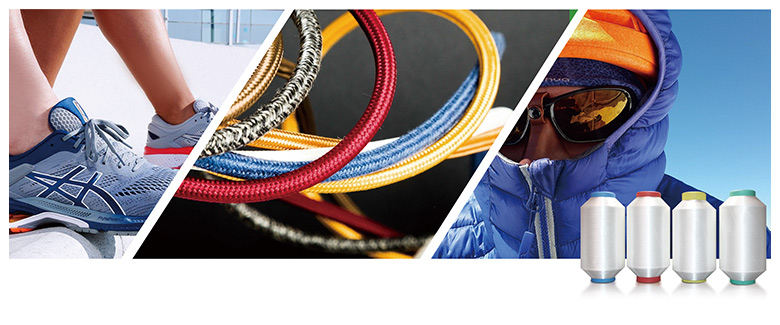
In the field of clothing and textile, nylon thermal fuses are suitable for applications such as seamless clothing, lace accessories, garment lining fabrics, and fabric tape bonding. The low-temperature melting process enables seamless bonding without damaging the delicate fabric texture, effectively fixing the fabric structure, reducing thread shedding and deformation issues, and enhancing the overall texture of the finished product. In shoe material processing, they are mainly used for the shaping of fly-ripped shoe uppers and the bonding of lightweight shoe materials, balancing breathability and structural stability, and simplifying complex processing procedures. At the same time, they can be adapted to industrial bonding scenarios such as home textiles and automotive interiors, meeting the needs for daily shaping and reinforcement bonding.
Analysis of Performance Differences of Main Types of Heat-Setting Wires
The core differences among different materials of heat-setting wires mainly lie in three aspects: temperature, elasticity, and durability. Nylon heat-setting wires excel in achieving a balanced combination, being flexible and resistant to folding, and suitable for a wide range of fabrics, making them suitable for most conventional bonding scenarios. Polyester heat-setting wires are superior in withstanding high temperatures and have solid shaping effects, making them more suitable for thick and highly shaped products. TPU heat-setting wires have more prominent elasticity and sealing properties, and are mainly used for flexible waterproof and high-rebound products.
Selection suggestions: For regular textile seamless bonding and shoe material shaping, nylon heat-setting wires are the preferred choice; for high-temperature shaping conditions, polyester heat-setting wires should be selected; for waterproof and high-stretch scenarios, TPU materials are suitable. Fujian Zhangping Xialong High-tech Chemical Fiber focuses on nylon heat-setting wires, polyester heat-setting wires, TPU/PES heat-setting net membranes and other products. It can adapt to corresponding material solutions based on customer process requirements.
Fujian Zhangping Xielong Group High-tech Chemical Fiber Company Co., Ltd. has been continuously focusing on the fields of hot melt filaments and hot melt film membranes. They have been working diligently to ensure the stability of their products and the accuracy of their cooperation.
Fujian Zhangping Xielong Group High-tech Chemical Fiber Company Co., Ltd. leading products of include:nylon thermal fuse, TPU special filament, polyester thermal fuse, TPU hot melt omentum, PA hot melt omentum,.The company has always adhered to the 3s core service tenet: "saving time, cost savings, saving losses", advocates a total of industrial value, and is committed to providing a better solution for the overall industrial chain. Plan, welcome to buy the nylon thermal fuse,polyester thermal fuse!
- The 16th China Textile Academic Annual Conference was held in Wuhan.
- Xiaolong Group's Nylon thermal fuse: How Its Adhesive Properties Can Enhance Efficiency in
- The government-business symposium on the textile and garment industry chain in Heze City w
- Nylon thermal fuse: To determine the quality of the bonding effect, the first thing to che
- The 2026 Advanced Fibre Materials Innovation Conference was held in Shengze.
- Fujian Zhangping Xielong Group High-tech Chemical Fiber Company Co., Ltd. will guide you
- The 2026 Shanghai Autumn Yarn Expo, a yarn exhibition, concluded officially at the Nationa
- Nylon thermal fuse ≠ ordinary thermal fuse
- The promotion meeting for the development of the high-end textile and clothing industry cl
- Textile bonding, why are more and more people using nylon thermal fuse adhesive?