
- Select the polyester thermal fuse and improve the production yield of the composite product.
- Select the polyester hot melt filament and improve the production yield of the composite product.
- The training and promotion activity on intellectual property for the textile and footwear industry in Fujian Province was successfully held in Changle District, Fuzhou City.
- The invisible framework hidden in autumn clothes: What is nylon thermal fuse thread?
- Analyzing Industry Trends from the 2026 Global Home Textile Exhibition
- Say goodbye to pinholes and residues! Nylon thermal fuse enables integrated textile molding

- Contact: Mr. Jin +86 15805011538
- Email: xmzx333@163.com
- Web: www.xlfiber.com
- Add: 85 Jinghua Avenue, Xiyuan Industrial Park, Zhangping City, Fujian
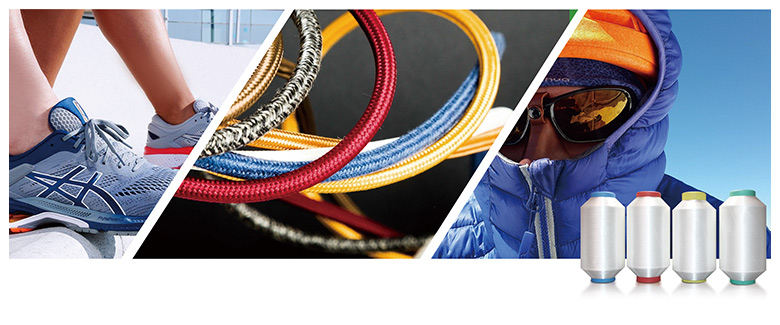
In the production of 3D fly-knit shoe uppers, fabric webbing, and undergarment hemming, nylon thermal fuses (nylon hot melt fibers) are used as low-melting-point polyamide fibers. The matching degree of their melting points with the fabric often affects the final shaping quality.
Common melting points include 75℃, 85℃, 95℃, 100℃ and 110℃. From a production perspective, they can be simply classified into two categories:
75℃ - 85℃ Low-Temperature Type: When the processing object is a part of underwear lace, lace trim, or ultra-thin shoe uppers, using the low-temperature type hot melt adhesive can lower the heat setting temperature. This helps maintain the original feel of the lightweight fabric and reduces edge curling or shrinking caused by high temperatures.
95℃ - 110℃ Regular Type: For 3D fly-ripped shoe uppers that require strong setting force, high-strength binding threads, and ordinary clothing accessories, the regular type of heat-melt adhesive is more suitable. In actual production, it is necessary to note that the heat pressing temperature should be slightly higher than the melting point of the adhesive thread, and sufficient holding time should be maintained to ensure that the heat-melt adhesive fully melts and adheres to the surrounding fibers.
When choosing nylon thermal fuse, it is recommended to consider the type of fabric, the heating capacity of the equipment, and the required bonding strength. A reasonable match between the low-temperature type and the conventional type should be made to balance processing efficiency and product qualification rate.
The nylon thermal fuse material complies with environmental protection testing standards and does not contain harmful substances such as formaldehyde and heavy metals. It is suitable for close-fitting clothing, infant products, and functional shoe materials. The nylon hot melt filament helps the industry find a better solution between quality and efficiency in a practical way.
Fujian Zhangping Xielong Group High-tech Chemical Fiber Company Co., Ltd. leading products of include:nylon thermal fuse, TPU special filament, polyester thermal fuse, TPU hot melt omentum, PA hot melt omentum,.The company has always adhered to the 3s core service tenet: "saving time, cost savings, saving losses", advocates a total of industrial value, and is committed to providing a better solution for the overall industrial chain. Plan, welcome to buy the nylon thermal fuse,polyester thermal fuse!
- Select the polyester hot melt filament and improve the production yield of the composite p
- Select the polyester thermal fuse and improve the production yield of the composite produc
- The training and promotion activity on intellectual property for the textile and footwear
- The invisible framework hidden in autumn clothes: What is nylon thermal fuse thread?
- Analyzing Industry Trends from the 2026 Global Home Textile Exhibition
- Say goodbye to pinholes and residues! Nylon thermal fuse enables integrated textile moldin
- The 2026 Collaborative Innovation Conference on the Bio-based Chemical Fibers and Raw Mate
- Understand thermosetting wires from the perspective of application scenarios. Professional
- Weak demand during the off-season has dragged down the prices of chemical fiber raw materi
- New Approach to Shoe Upper Design: Replacing Adhesives with Nylon thermal fuses to Enhance